
Skip to content

Acupuncture and Stress

A study published in the Annals of Yoga and Physical Therapy looked at how acupuncture treatments affect stress levels in administrative workers at a local hospital. The study included 58 participants who reported high levels of stress associated with their jobs. The participants were treated with eight weeks of auricular acupuncture. After the eight acupuncture sessions, the workers reported their stress levels had decreased from high to moderate. The study hypothesizes reduced stress levels are associated with regular acupuncture treatments due to the release of neurotransmitters in the body. This study and many others are providing evidence that acupuncture can indeed decrease stress levels and improve overall health.

Stress is defined as either pressure or tension exerted on an object or a state of mental or emotional strain resulting from adverse or demanding circumstances.

Here are some facts from the Global Organization for Stress:

  • Americans report higher levels of stress than most people in other countries around the globe.
  • Surveys show nearly one out of 75 people worldwide, experience panic attacks.
  • Stress in American teenagers is now one of the top health concerns and it is being found that teenagers experiencing stress are more likely to develop long-term health problems.
  • We all experience stress in our lives.
  • But learning how to deal with it can be crucial for a happy, healthy life.

One way to deal with stress involves the use of a 3,000 year old medical system, known as Traditional Chinese Medicine or TCM. TCM uses many different modalities or tools to treat the human mind and body. The most commonly used modality is acupuncture. And while acupuncture is still not widely accepted in the United States, it is gaining ground.

Studies show acupuncture can reduce stress when used regularly. The Journal of Endocrinology published a study showing stress hormones, like cortisol, were lower in rats that had received electroacupuncture. The use of electroacupuncture actually blocked the chronic stress hormones in the rats. It does the exact same thing for humans. TCM practitioners have known this for thousands of years and they didn’t need the research to prove it.

Specific acupuncture points on the body are better for relieving stress and are used frequently by licensed practitioners. One of these points is Yin Tang. Yin Tang is located directly between the inner edges of the eyebrows. It is a reflex point of the pituitary gland. Yin Tang calms the mind and relaxes the body by helping control hormone secretions.

Another acupuncture point, Kidney 1, is not as frequently used because of its location. But it can work wonders for decreasing stress. Kidney 1 is located on the bottom of the foot, at the junction of the anterior one third and posterior two thirds of the line connecting the base of the second and third toes and the heel. This point is VERY sensitive, but it has amazing properties. Kidney 1 can sedate and calm the mind, while also regulating blood flow to the upper part of the body, aka the brain.

There are other tools as TCM practitioners we can use to relieve stress, such as cupping and herbs. But acupuncture and acupressure tend to work the quickest. Ask me to find out more!

CITATION: https://www.researchgate.net/profile/Cleria_Maria_Bittar2/publication/319186420_Annals_of_Yoga_and_Physical_Therapy/links/599a18daa6fdcc261586b19b/AnnalsofYogaandPhysicalTherapy.pdf

Posted in Uncategorized | Comments Off on Acupuncture and Stress

How Stress Physically Affects Your Body

Stress. It’s not a word that makes most of us feel elated or excited. However, stress, by design, is the body’s way of signaling for help or a break in the routine. If we don’t listen to these signals, we can develop imbalances in our bodies, which can then lead to illnesses.
The dictionary defines stress in multiple ways, but there is only one that matters when we discuss how stress affects our physical bodies. The definition is this, “stress is a physical, chemical or emotional factor that causes bodily or mental tension”. The definition itself indicates stress can affect our bodies.

One of the most visible way stress affects our bodies is our appearance. People who are under chronic pressure and stress tend to look older and fatigued. This happens because cortisol, the stress hormone in our bodies, builds up, which then increases the amount of free radicals in skin cells. Free radicals damage the skin cells causing them to become dull and dehydrated. Women typically show this more than men.

Another big player in the stress game is digestion. Many people today suffer from heartburn and upset stomach on a regular basis. These symptoms can be caused by excess stress. Stress causes the body to alter gastrointestinal motility by moving blood normally used in the digestive process, away from your belly and midsection, as part of the “fight or flight” response that usually occurs when you are stressed. Thus, the lack of blood and fluids in the gastrointestinal tract can lead to increases in stomach acid, causing stomach upset and heartburn.

Minor stress will stimulate the immune system which helps us heal from illness and disease. However, chronic stress can actually compromise the immune system, once again due to the cortisol hormone. Chronic stress sufferers tend to get sick more often and the illnesses may last longer. This is also a factor in people who develop terminal illnesses like cancer.

Excess stress can cause your heart to work too hard and usually for too long a period. These factors can then lead to sustained increased blood pressures or hypertension. Hypertension puts more stress on your blood vessels, which can increase your possibility of a stroke or heart attack.

Chronic stress can also be detrimental to your muscles and can then lead to chronic aches and pains. Muscles are supposed to tense up when under stress. But when you are constantly stressed, the muscles never get the chance to completely relax. Tight muscles result in headaches, back, neck and shoulder pain. Over time, those tight muscles and chronic pain can cause many to seek pain relief through prescription pain medications.

That’s the bad news. The good news is you can address and treat stress naturally. Getting proper nutrition and removing stressors will help greatly. Acupuncture is also a wonderful tool for fighting stress. As few as two needles can reset your body and decrease your daily stress levels. Another method is to couple acupuncture with practices like qigong, tai chi, and/or meditation. Talk with an acupuncturist to find out how to resolve your stress the natural way.

Posted in Uncategorized | Comments Off on How Stress Physically Affects Your Body

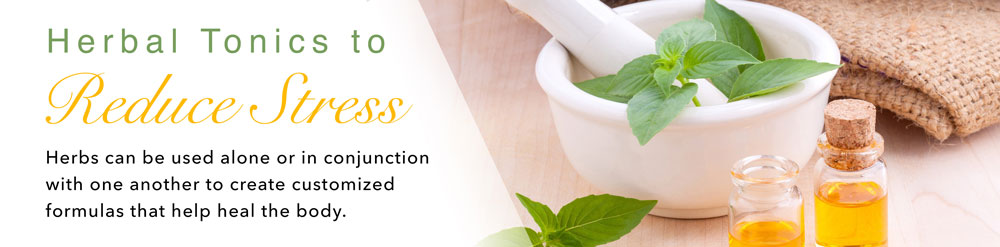
Herbal Tonics to Reduce Stress

Stress is something that affects everybody. Stress is defined as a state of mental or emotional tension or strain resulting from demanding or adverse circumstances. This can result in a multitude of symptoms, including headaches, muscle tension, pain, insomnia, worry, anxiety, depression and even disease. And according to a recent survey, nearly 77 percent of all Americans regularly experience physical or psychological symptoms caused by stress (American Institute of Stress, May 2017). continue reading »
Posted in Herbal Medicine, Stress, Traditional Chinese Medicine | Tagged , , , | Comments Off on Herbal Tonics to Reduce Stress

5 Reasons to get Acupuncture this Fall

Fall is a favorite season for many people. The weather starts to get a little cooler, things begin to slow down and preparations for the holidays are in full swing. For many others, fall is not so festive. Many people get sick during the fall months, allergies can flare up and many don’t like that the hours of sunlight decrease steadily, sometimes leading to seasonal depression.

There are many reasons to get acupuncture during the fall. One of the biggest reasons is to avoid getting sick as the seasons change. In Traditional Chinese Medicine (TCM), fall is associated with the lung and large intestine energetic pathways. These two pathways work symbiotically to control the immune system from both the inside and outside of your body. And, if you take good care of these energetic pathways during the fall, you are bound to feel better throughout the season. But just to be sure, getting regular acupuncture treatments might be a good idea. It is recommended to start a couple of weeks before fall really kicks in.

Autumn is associated with the element of metal. According to TCM, the element of metal governs the mind, order, stability and organization. As fall approaches, we tend to be more reflective, turning inward and going into hibernation mode. It’s a great time to organize and prepare for the upcoming winter months. Emotionally, fall is associated with sadness and grief. Therefore, as the nights get longer, it is very important to keep the mind clear and let go of your negative emotions. Acupuncture can be a wonderful tool to help ward off depression, sadness and grief, both before and during the months of fall.  Acupuncture treatments help balance moods by regulating hormones in the body.

For those who love the long hours associated with the summer months, fall is not easy to slide into, especially when it comes to sleep. Many people have difficulty going to sleep earlier, which is recommended when the days begin to shorten. This is where acupuncture can be beneficial. Certain acupuncture points are very effective at calming the mind and helping induce rest and relaxation. This is why so many people who receive regular acupuncture tend to take a nap while the treatment is taking place.

Getting a handle on stress before the full swing of the holidays hits is always a good idea. Acupuncture can help with that too. Acupuncture treatments are very relaxing for the majority of people. Around the holidays, people experience high levels of stress.  But receiving regular acupuncture treatments ahead of the holidays, will allow for a smooth holiday season.

Lastly, acupuncture can help control, or at least tone down the allergy flare ups that frequently occur during the fall. This goes back to how acupuncture works on the immune system. But many people who suffer from allergies only experience minor symptoms, like a runny nose and watery, itchy eyes. A few little needles can help tremendously with allergy symptoms.

So what are you waiting for? Fall into hibernation mode through the use of acupuncture.

Posted in | Comments Off on 5 Reasons to get Acupuncture this Fall

Herbal Tonics for Fall

Fall is a time of transition for nature, as well as our own bodies. In Traditional Chinese Medicine (TCM), each season is associated with specific organ systems. During the autumn months, the lung and large intestine energetic meridians are in control. It is extremely important to improve lung function during the fall months to allow for an easy transitional period and to prepare for the upcoming winter months.

The lung system in TCM is responsible for the body’s immunity or Wei Qi (pronounced “way chee”). When the Wei Qi becomes depleted or deficient, the body becomes ill. And during the fall months, when the weather is transitioning and temperatures are falling, it becomes vital to take precautions so the immune system and Wei Qi don’t fail our bodies, allowing disease to take root. The most common diseases of the fall season are allergies, colds and the flu. But there are ways to boost or tonify the Wei Qi.

Traditional Chinese Medicine utilizes many different modalities to help keep the body free from disease. These modalities include acupuncture, moxibustion, nutrition, qi gong, tai chi and herbal formulations. It is these herbal formulations we are discussing today.

Chinese herbal medicine has been used for millennia to keep the body free from disease and to help remove disease when it attacks. Herbs can be used alone or combined to make stronger herbal formulas. And while not all of the herbs we will discuss here are specific to TCM, they can be found and utilized easily.

Astragalus or Huang Qi: This herb is a favorite among TCM practitioners. It is an excellent tonic herb, as well as an adaptogen that can be used year-round to ensure good health. In TCM, it is considered to be one of the best tonic herbs available, especially for those who are already fatigued. Specifically, this herb is known for its ability to strengthen the Wei Qi.

Cordyceps or Dong Chong Xia Cao: This herb is known to enrich the bone marrow, where white blood cells are made. White blood cells are a large part of the immune system and they specifically fight off infections in the body. In this way, Dong Chong Xia Cao definitely plays a role in tonifying the Wei Qi. This herb is also used to replenish the adrenal glands when there is adrenal fatigue. When the adrenals are fatigued, the whole body is running at a deficient level.

Reishi Mushroom or Ling Zhi: This herb is sometimes called the “great protector” because it guards the body against the detrimental effects stress can have on the physical body. When taken regularly, it has been shown to improve immunity, while also calming the nerves. Specifically, it can help inhibit tumor growth in both breast and prostate cancer. 

As you can see, herbs can be very beneficial and help keep the body free from illness. The herbs mentioned above are just a few examples that would be good to have around during the season of fall to help boost your immune system.

Posted in | Comments Off on Herbal Tonics for Fall
8123744518 Directions Contact/Schedule