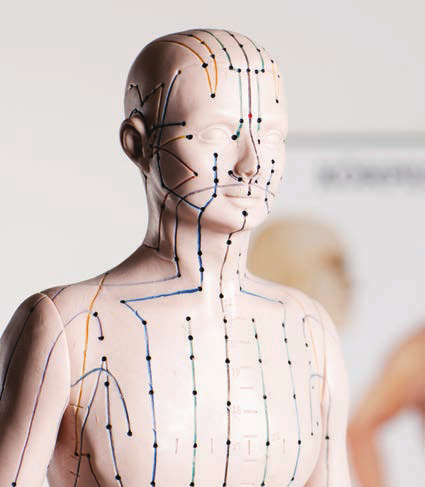
 Some of the most important channels of energy in the human body aren’t the primary acupuncture meridians, but rather deeper channels of energy flow called the Extraordinary Vessels. These are deep wells of blood and energy within the body that help to regulate the 12 main channels. They are a deeper source of our body’s fundamental physiological energy. One of the most important Extraordinary Vessels is called the Conception Vessel, or Ren Mai. It is one of only two Extraordinary Vessels that has actual acupuncture points along its pathway.
The Ren Mai, also called the Conception Vessel or the Directing Vessel, originates between the kidneys, flows down (through the uterus in women) to the perineum, and then runs up the midline of the front of the body to the mouth. There are 24 acupuncture points along the Ren Mai, but the whole of the vessel is accessed through opening points on the kidney and lung meridians on the ankles and wrists.
The Ren Mai is referred to as the Sea of Yin, and exerts an effect on all of the yin channels. It can be used clinically to nourish the yin of the entire body. Based on Traditional Chinese Medicine theory, yin represents all the cool, watery, passive, inward, resting physiological forces within the body. Because of its action of nourishing the whole body’s yin, the Ren Mai can be used to treat such symptoms as hot flashes, night sweats, sweaty palms, dry mouth and throat and certain types of anxiety.
The Ren Mai flows through the uterus (or the space where the uterus energy resides, if a woman has had a hysterectomy.) It is said to regulate the uterus and the blood, and is therefore responsible for puberty, menstruation, fertility, pregnancy, childbirth, postpartum healing, perimenopause and menopause. The Extraordinary Vessels are deep wells of energy the other meridians draw from if they are depleted. Therefore, the Ren Mai is particularly important for women when dealing with an issue of depletion – such as lack of periods, the postpartum period, and menopause (which is a natural weakening of the yin.)
The function of the Ren Mai is not just to nourish, however. It also moves energy in the uterus and the “lower burner” (meaning the organs within the pelvic cavity, including the bladder, and the prostate in men.) This means it can be used for a wide array of symptoms including chronic bladder problems, hernias, prostate issues, fibroids, abdominal masses and ovarian cysts.
The Ren Mai is opened by certain points on the lung and kidney meridians, and it is intricately tied to both. It helps promote the descending of lung Qi (lung Qi is supposed to descend…if it doesn’t, symptoms like wheezing and coughing occur), as well as help the kidneys grasp the Qi. Taken together, this means that the Ren Mai helps with respiration, aiding both in inhalation and exhalation. As such it is frequently used to treat asthma.
With the right presentation, the Ren Mai can also be used to regulate fluid distribution in the abdomen, activate metabolism and regulate fat tissue.
The Ren Mai can be treated with acupuncture, Chinese herbal medicine and certain nourishing foods.
 A study published in the Journal of Acupuncture and Meridian Studies looked at the efficacy of acupuncture to control the symptoms of primary dysmenorrhea. The study examined 60 women who were split into two different groups: the study group or the control group. The women in the study group received acupuncture for 15 days per month over a 90-day period. The women in the control group did not receive acupuncture. At the end of the study, it was concluded the women receiving acupuncture experienced far fewer symptoms with less severity than those who did not receive acupuncture. Symptoms such as cramps, pain, mood changes, diarrhea and fatigue all were reported less frequently in the study group. This study indicates that acupuncture is a viable tool for treating dysmenorrhea.
 Most acupuncture points are located on the 12 primary channels that flow along the surface of the body. However, there are eight Extraordinary Vessels that flow more deeply in the body, and are perhaps even more powerful that the 12 primary channels. The Extraordinary Vessels regulate the 12 channels, and are deep lakes of energy, which can feed the 12 primary channels when they are depleted.
  A study published in the British Medical Journal examined how acupuncture can be beneficial for low back pain. The researchers split 241 people into two groups. One group received acupuncture treatments and the other group only received conventional treatments for pain. Over the course of the two-year study, researchers found that those participants receiving acupuncture reported their pain levels were less and that they needed less medication. While the differences in pain scores were not astronomical, this study does demonstrate that the addition of acupuncture to conventional treatments for low back pain can be helpful.
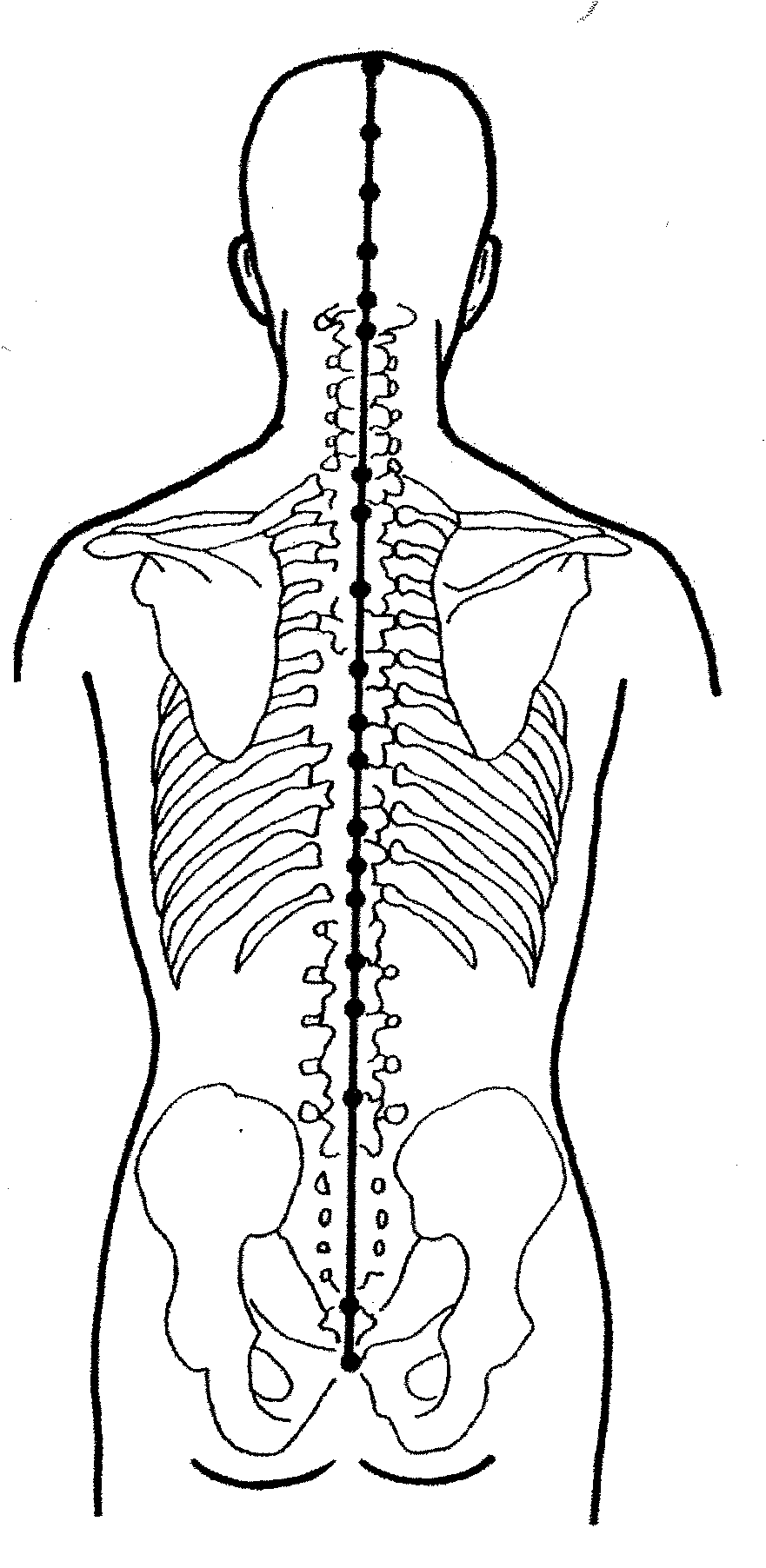 In addition to the 12 main acupuncture meridians that flow along the surface of the body, practitioners of Traditional Chinese Medicine also treat deeper channels of energy in the body called the Extraordinary Vessels. If you think of the primary acupuncture meridian as rivers of energy and blood within the body, then the Extraordinary Vessels are deep lakes. They act to regulate the flow of Qi and blood within the 12 main channels – if there is not enough energy in a particular channel, the Extraordinary Vessels can help to fill it. Likewise, if energy is overflowing or erratic in a particular acupuncture meridian, the Extraordinary Vessels can help to redirect the excess energy to other areas of the body.